


Space Knowledge
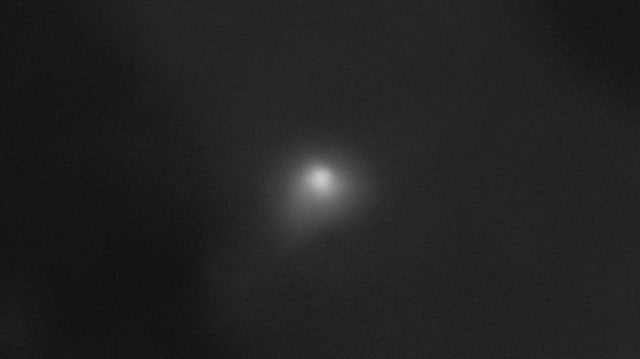
Alien or Ice? NASA’s New Images of 3I/ATLAS Finally Reveal the Truth
It’s official: 3I/ATLAS is a comet. Today, NASA released the highest-resolution images yet of the third interstellar object to visit our solar system, effectively debunking the artificial megastructure theories. Read the full breakdown of the discovery and what to expect during its closest approach this December.
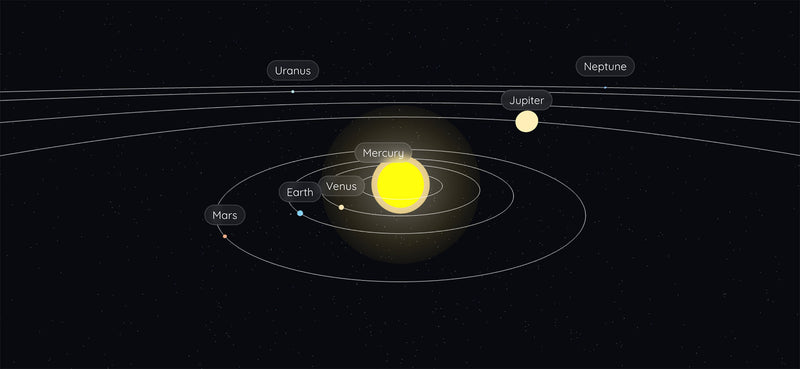
Interactive Solar System Simulator for Learning & Exploration
Experience the Solar System like never before with Space Artsy’s interactive simulator — explore planets, moons, and stars while learning and inspiring curiosity in all ages.
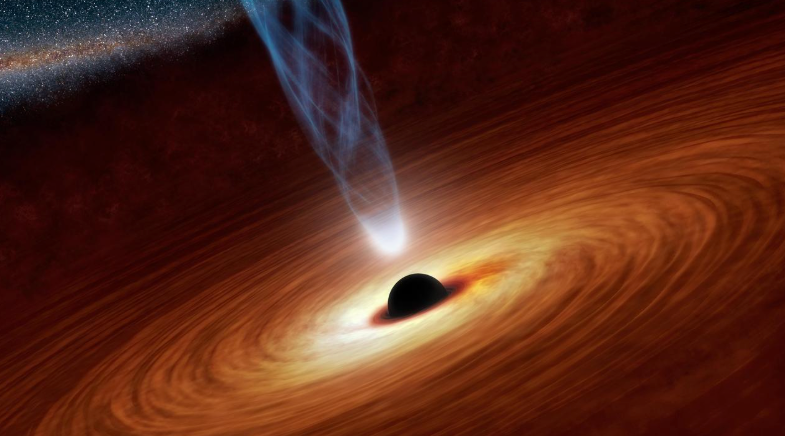
What is a Black Hole? A Simple Guide to the Universe's Most Mysterious Objects
Have you ever heard of an object in space so powerful that nothing, not even light itself, can escape its grasp? This isn't science fiction; it's a black hole, one of the most fascinating and mind-bending phenomena in the entire cosmos. But what are they, really? Forget the idea of a cosmic vacuum cleaner. A black hole is less of a "hole" and more of an incredible concentration of matter packed into an impossibly tiny space. Join us as we explore these elegant, enigmatic giants. How Do You Make a Black Hole? The most common way a black hole is born is from the death of a massive star. When a star many times larger than our sun runs out of fuel, it can no longer support its own immense weight. The core collapses in on itself with such incredible force that it crushes down into a single point of infinite density called a singularity. This collapse creates a gravitational field so intense that it warps the very fabric of space and time around it. The boundary of this region is called the "event horizon"—the point of no return. Once anything crosses it, it can never leave. If They're Invisible, How Do We See Them? Black holes themselves are invisible, but their effect on the universe around them creates some of the most beautiful sights we've ever witnessed. We can find them by observing their powerful influence: 1. Accretion Disks Often, a black hole is surrounded by a swirling, superheated disk of gas and dust that is slowly being pulled in. This "accretion disk" glows with incredible brightness, emitting intense radiation across the spectrum. It's a stunning, fiery halo that beautifully outlines the darkness within. 2. The Dance of Stars By observing the orbits of stars, we can detect the presence of a black hole. At the center of our own Milky Way galaxy, astronomers have watched for years as stars dance around a seemingly empty point in space, held in orbit by the immense gravity of a supermassive black hole. Finding Beauty in the Void Black holes represent the ultimate power and mystery of the universe. They are a testament to the fundamental forces that shape reality, creating both an ending and a new beginning. Their elegant, destructive power is a source of endless inspiration. It's this blend of chaos and beauty that inspires our work at Space Artsy. The untamed, creative energy captured in our Chaos lamp, or the timeless mystery of our Eternal Collection, are small tributes to these cosmic wonders. They are handcrafted reminders that even in the deepest darkness, there is a profound and captivating beauty to be found.
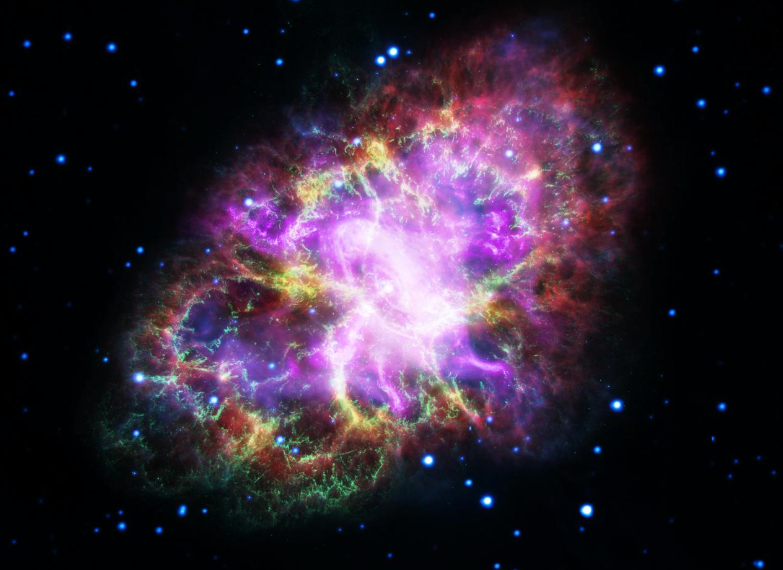
What is a Nebula? A Beginner's Guide to the Most Beautiful Art in the Universe
Have you ever looked at a breathtaking image from deep space, filled with swirling clouds of vibrant color, and wondered what you're actually seeing? Chances are, you were looking at a nebula—one of nature's most spectacular works of art. But what exactly is a nebula? Far from being just a pretty picture, these cosmic clouds are the cornerstones of the universe. They are the birthplaces of stars and the beautiful remnants of those that have lived and died. Join us as we explore these enchanting celestial wonders. What are Nebulae Made Of? At its simplest, a nebula (Latin for "cloud") is an enormous interstellar cloud of dust and gas, primarily hydrogen and helium. But it's the trace elements and the influence of nearby stars that give them their famous, otherworldly glow. The intense radiation from young, hot stars energizes the gas, causing it to light up in a stunning display of color, much like a neon sign. The Different Types of Cosmic Art Nebulae come in several beautiful forms, each with its own unique story and appearance. 1. Emission Nebulae These are the most vibrant and famous of all. They are clouds of high-temperature gas that are energized by the ultraviolet light from nearby stars, causing them to glow in rich reds and pinks. They are true stellar nurseries, actively forming new stars within their swirling depths. The famous Orion Nebula is a breathtaking example of this, a place of chaotic and beautiful creation. 2. Reflection Nebulae Instead of emitting their own light, reflection nebulae shine because they are reflecting the light of nearby stars. The dust particles in these clouds scatter blue light more effectively than red, giving them a characteristic ethereal blue hue. They are often found near emission nebulae, creating a stunning cosmic contrast. 3. Dark Nebulae Sometimes, the dust in a nebula is so dense that it blocks out all light from behind it, creating what looks like a dark, empty patch in the sky. But these are not empty at all; they are simply clouds of dust and gas so thick that we can't see the stars behind them. The famous Horsehead Nebula is a perfect example of a dark nebula, a beautiful silhouette against a backdrop of glowing gas. Bringing the Cosmos Home The universe is the ultimate artist, and nebulae are its grandest masterpieces. They are a reminder that even in the vast darkness, there are places of incredible beauty, creation, and light. It's this profound feeling of wonder that inspires our work at Space Artsy. Each of our handcrafted lamps, from the swirling Galaxy Collection to the powerful Chaos design, is a small attempt to capture a piece of that cosmic art. They are designed to be more than just a light; they are a daily reminder of the serene, artistic beauty that exists in the universe, waiting to be discovered.

